
A few years ago, I shipped six glass tumblers to a customer wrapped in nothing but old newspaper. Four of them arrived in pieces. That refund taught me more than any guide could, and it is why packing bubble wrap is now the first thing I order for my stock, not the last. It also made me realize why professional movers and packers in Dubai rely on proper protective packaging to keep household and commercial belongings safe during relocation.Since then, I have used it on crockery, laptops, framed photos, ceramic planters, and a full-length mirror during a house move. Bubble wrap for packing looks simple, but small choices decide whether a parcel arrives clean or in bits: the bubble size, the number of layers, which way the bubbles face, and even the tape you pick.This guide covers what I have learned about bubble wrap packing, including the mistakes I made so you do not have to repeat them. If you landed here searching for how to use bubble wrap for packing, the full step-by-step method is further down.
What Is Packing Bubble Wrap and How Does It Work?
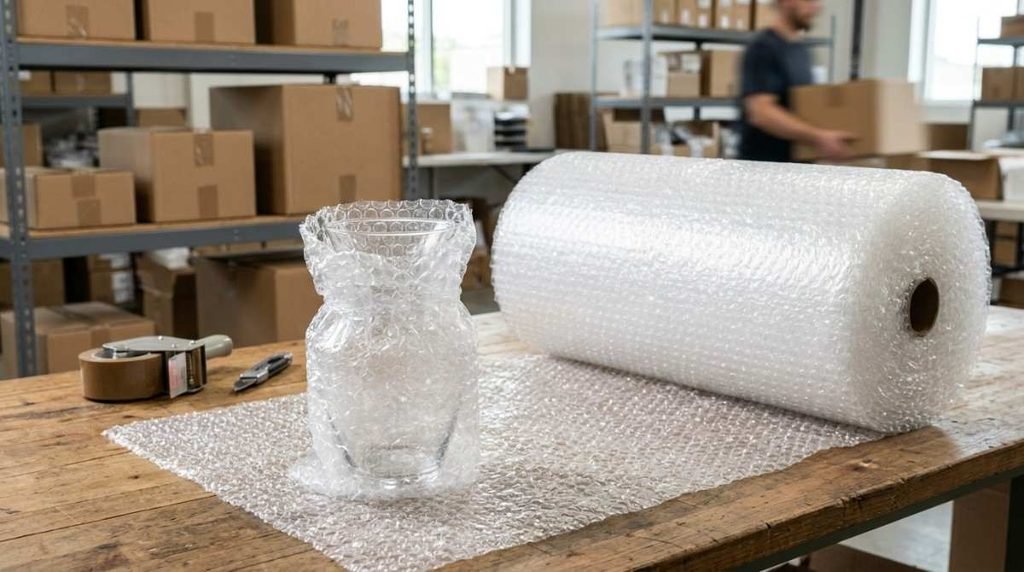
Packing bubble wrap is a flexible plastic sheet with small pockets of trapped air, sold as rolls, sheets and bags. Those pockets sit between your belongings and everything a courier or removal truck can throw at them, from drops and vibration to the weight of other boxes. This protective cushioning is particularly useful when preparing household belongings for relocation, which is why professional villa movers in Dubai often rely on suitable protective packaging to safeguard fragile items during villa moves. It belongs to the wider family of protective packaging and air bubble cushioning, alongside foam wrap and air pillows.
Think of it as a tiny airbag around your product. The first time I pressed a fresh roll against my palm, I understood why it works. Every bubble gives a little, and that give is what absorbs the knock.
What Is Bubble Wrap Made Of?
Most rolls are made from polyethylene, usually LDPE (low-density polyethylene). Two layers of film are heat-sealed together, one flat and one shaped into small domes, and air is locked inside each dome. LDPE is soft, light and tough enough not to crack in cold storage, which is why it became the standard cushioning material for fragile goods.
How Do Air Bubbles Protect Fragile Items?
When a box is dropped or bumped, the bubbles compress first. They spread the force over a wider area and slow it down before it reaches the item. This is shock absorption in its simplest form. A glass with no wrap takes the full hit on one point, while a glass inside three layers of bubbles shares that impact across dozens of tiny air cushions. This type of protective packaging is also important during workplace relocations, where professional office movers in Dubai use suitable cushioning materials to help protect office equipment, computers, furniture, and other fragile items during transportation.
Why Is Bubble Wrap Used for Packing?
Ask any seller, mover or warehouse worker and you will hear the same few reasons. Here is what I have noticed in real use.
Shock and Impact Protection
Corners and edges break first. Bubbles wrapped around them take the blow so the item does not. This is the main reason bubble wrap for packing is still the default choice for fragile items, even with so many newer materials available.
Lightweight and Flexible Material
Couriers charge by weight and size. A roll of bubble wrap adds very little to a parcel, and it bends around odd shapes like bottles, lamp bases and handles. Rigid foam cannot do that.
Moisture and Surface Protection
The plastic film resists light moisture and keeps dust, scratches and fingerprints off polished surfaces. It is water resistant, not fully waterproof, and I will explain the difference in the FAQ.
Reusable and Recyclable Packaging
I have reused the same sheets for three or four shipments when they stayed intact. LDPE can also be recycled where facilities accept it, which I cover in more detail below.
Different Types of Bubble Wrap for Packing
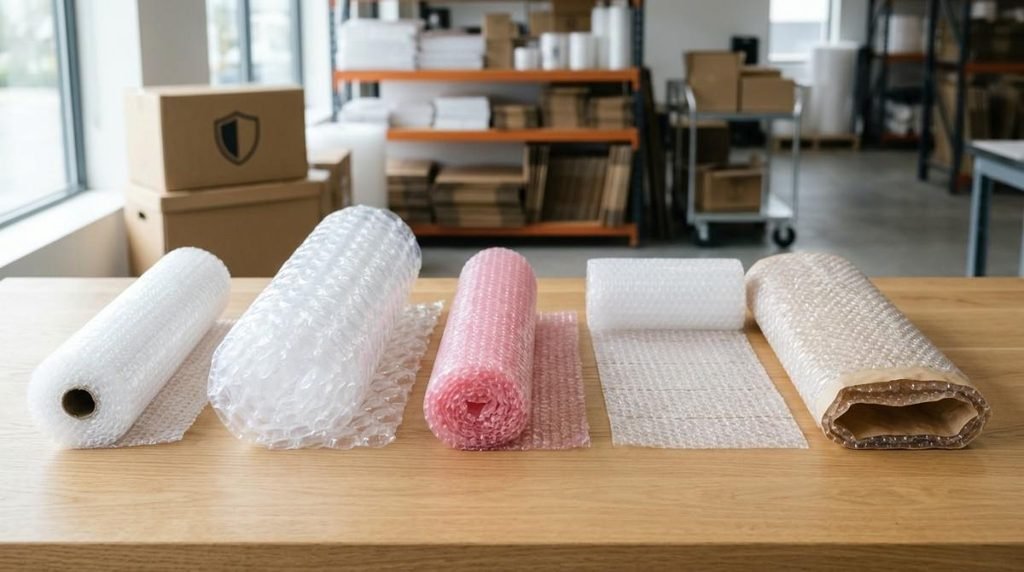
Not every roll is the same. These are the five types I have actually used.
Small Bubble Wrap
Small bubbles are around 10 mm across. They sit snugly against the item, which makes small bubble rolls ideal for phones, cosmetics, jewellery boxes, books and anything with a delicate surface.
Large Bubble Wrap
Large bubbles are around 25 mm. They hold more air and cushion heavier loads, so large bubble rolls work well for furniture, lamps, mirrors and appliances. They also make a great void fill at the bottom of a box.
Anti-Static Bubble Wrap
Usually pink or blue, this type is treated to stop static build-up. If you ship circuit boards, hard drives or other electronic components, use anti-static packaging. Ordinary bubble wrap can generate static that damages sensitive parts.
Perforated Bubble Wrap
The roll is pre-cut at regular intervals, so you tear off sheets by hand. When I am packing fifty orders in an afternoon, this saves me a lot of time and a lot of scissors.
Laminated and Paper Bubble Wrap
Laminated versions have an extra layer, sometimes aluminium, for added strength or insulation. Paper bubble wrap uses kraft paper with a cushioned inner layer, and it is a popular sustainable packaging option for brands that want to cut down on plastic.
How to Choose the Right Bubble Wrap Size
Before you learn how to use bubble wrap for packing, you need the right roll in your hands. A wrong choice wastes money or leaves the item exposed.
Small vs. Large Bubble Wrap
My simple rule: small bubbles for small and delicate, large bubbles for big and heavy. Small bubbles give a tighter, more even surface. Large bubbles give deeper cushioning. For mixed shipments I keep both on the shelf.
Choosing Bubble Size According to Item Weight and Fragility
- Light and fragile (perfume, glass jars, phone accessories): small bubbles, two layers.
- Medium weight (crockery, kitchen appliances, books): small or large bubbles, three layers.
- Heavy or bulky (monitors, vases, framed art) large bubbles, three or more layers, plus extra corner protection.
Selecting the Right Roll Width and Length
Common widths are 50 cm, 75 cm, 1 m and 1.5 m, with lengths from 10 m up to 100 m. For home moves, a 10 m or 50 m roll is plenty. For a business, buying packing bubble wrap in a wider, longer roll cuts the cost per metre and reduces how often you reorder. A 1.5 m wide roll is also handy for wrapping furniture in one pass.
How to Use Bubble Wrap for Packing
This is the exact method I follow, whether I am packing one vase or fifty orders. Learning how to use bubble wrap for packing properly takes about ten minutes and saves you a lot of money in replacements.
Step 1: Choose the Right Bubble Wrap
Match the bubble size to the item as explained above. Good bubble wrap packing starts with the right material, not with more material.
Step 2: Prepare the Item Before Wrapping
Clean and dry the item. Remove loose parts, take lids off bottles and put small accessories in their own bags. If something has a handle or spout, tape it gently against the body first. When I pack a teapot, I wrap the lid separately, then the pot, so packing bubble wrap never has to hold a loose part in place.
Step 3: Position the Bubbles Correctly
Place the item at one end of the sheet with the bubbles facing inward, against the product. The flat side faces out, which keeps the wrap from snagging and gives you a smooth surface for tape. For bubble wrap packing, this one habit matters more than most people think.
Step 4: Wrap the Item with Enough Layers
Roll the item slowly and keep the wrap snug, not tight. Two layers suit light items, and three layers suit most fragile ones. Heavy or sharp-edged items need more. Add an extra fold over corners, because that is where breakage usually starts.
Step 5: Secure the Wrap with Packing Tape
Use packing tape and stick it to the bubble wrap itself, not to the product. Tape on a painted or polished surface can pull the finish off when you unwrap. Run a few strips around the middle and over the ends.
Step 6: Place the Wrapped Item Inside a Carton Box
Choose a sturdy carton box with some room to spare, about 5 cm of space on every side. Put a layer of bubble wrap on the bottom, set the item in the centre and keep it away from the walls.
Step 7: Fill Empty Spaces and Seal the Box
Fill any gaps with void fill such as crumpled paper, extra bubble wrap or air pillows. Give the box a gentle shake. If you hear or feel movement, add more filler. Then seal it with tape across all the seams and label it as fragile.
What Items Can You Protect with Bubble Wrap?
Almost anything breakable, scratchable or dent-prone. These are the categories I deal with most.
Glassware, Crockery and Ceramics
Wrap each piece individually, then bundle. For glassware and ceramics, I also slip a small bubble wrap sleeve inside cups and bowls so the rims do not knock together.
Electronics and Appliances
Screens, laptops, routers and kitchen appliances all need cushioning. Use anti-static bubble wrap for any electronic components, and keep the original box if you still have it. For shipping, packing bubble wrap inside the original box gives you the best of both.
Furniture and Home Décor
Table legs, chair frames, lamp stands and wooden shelves are easily scratched. Large bubble wrap held with tape protects the surface during moves.
Artwork, Mirrors and Decorative Items
Wrap framed pieces face to face with a layer of bubbles between them, then wrap the whole bundle. Put a cross of tape on mirrors and glass to hold shards together if something goes wrong.
Small Products and E-commerce Shipments
Cosmetics, candles, gadgets and jewellery do well in small bubble bags or mailers. They give you quick e-commerce packaging with a professional look.
Common Applications of Bubble Wrap Packing
Moving and Relocation
During my last house move I used one 50 m roll and about 20 boxes. Bubble wrap was the cheapest insurance of the whole job. Along with tape, boxes and markers, it is one of the moving supplies I would never skip, and packing bubble wrap works especially well for kitchen and living room items.
Shipping and Mailing
Couriers handle thousands of parcels a day. Proper bubble wrap packing adds real shipping protection and cuts the number of damage claims you have to deal with.
E-commerce and Retail Packaging
For online sellers, a cushioned parcel is also part of the brand experience. Customers remember an order that arrives intact and neat. Bubble wrap for packing keeps returns low and reviews high.
Warehouse Storage and Industrial Packaging
In warehouses, bubble wrap protects parts and finished goods during storage and transfer. It also guards against dust and light moisture on shelves.
Bubble Wrap vs. Other Packing Materials
Bubble Wrap vs. Foam Wrap
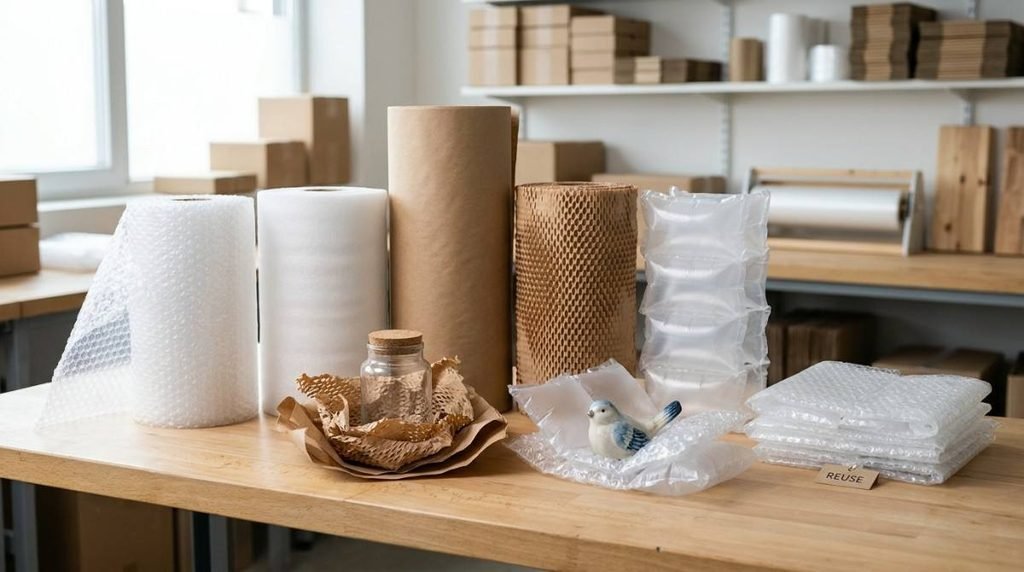
Foam wrap is thin and soft, great for polished surfaces and plates. Bubble wrap offers deeper cushioning and costs less per metre. For general shipping, I prefer bubble wrap, and I save foam for premium items.
Bubble Wrap vs. Packing Paper
Packing paper is good for filling space and wrapping non-fragile items. It does not absorb shock the way trapped air does. I use paper as a filler and bubble wrap as the main layer.
Bubble Wrap vs. Air Pillows
Air pillows are excellent void fill for lightweight parcels, but they do not wrap around an item. Together with bubble wrap, they make a strong combination for bigger boxes.
Common Mistakes to Avoid When Using Bubble Wrap
I have made most of these myself.
- Using too little. One thin layer is not protection. Most fragile items need at least three.
- Wrapping too loosely. The item slides inside the wrap and hits the box walls. Keep it snug.
- Taping directly to the product. It can strip paint, labels and finishes.
- Skipping the void fill. A wrapped item floating in an oversized box will still break.
- Using a weak box. The best wrap cannot save a flimsy carton. If you only remember one part of how to use bubble wrap for packing, remember this: the box matters as much as the wrap.
- Ignoring bubble size. Heavy items on small bubbles can flatten them. Most bubble wrap packing failures I have seen came from the wrong size, not the wrong brand.
Is Bubble Wrap Reusable and Recyclable?
Yes to both, with a few conditions. When I clean out the storeroom, I always check the bubbles first. If they are intact, the wrap goes straight back into use.
How to Reuse Bubble Wrap
Keep sheets with firm, unpunctured bubbles. Fold them flat and store them away from sunlight, since UV can weaken the film. Reused packing bubble wrap is perfect for internal cushioning and furniture protection.
How to Dispose of Bubble Wrap Responsibly
Popped or damaged wrap can be taken to a plastic recycling point that accepts LDPE film. Standard household bins often do not take it, so check with your local recycling facility before tossing it in.
Eco-Friendly Alternatives to Traditional Bubble Wrap
If sustainable packaging matters to your brand, look at paper bubble wrap, honeycomb paper, corrugated rolls or recycled-content bubble film. They suit lighter items best, and I use them for customers who ask for plastic-free parcels.
Frequently Asked Questions About Packing Bubble Wrap
What Is Packing Bubble Wrap Used For?
It is used to cushion and protect items during shipping, moving and storage. Bubble wrap for packing absorbs shocks, prevents scratches and keeps fragile goods like glass, ceramics and electronics safe in transit.
How to Use Bubble Wrap for Packing?
Pick the right bubble size, clean the item, wrap it with the bubbles facing inward, add two to three layers, tape the wrap to itself, place it in a sturdy carton box and fill all gaps before sealing. The full steps are explained in the how-to section above.
Should Bubble Wrap Bubbles Face Inward or Outward?
Inward, against the item, for most products. The flat side outside gives a smoother finish and holds tape better.
How Many Layers of Bubble Wrap Should I Use?
Two layers for light, low-risk items. Three layers for fragile ones. More for heavy, sharp or very valuable pieces.
Is Small or Large Bubble Wrap Better for Packing?
Neither is better overall. Small bubbles suit delicate, lightweight items. Large bubbles suit heavy, bulky ones.
Can Bubble Wrap Protect Electronics?
Yes. Use anti-static bubble wrap for bare components and circuit boards. Regular bubble wrap works for finished devices in their cases.
Can Bubble Wrap Be Reused?
Yes, as long as the bubbles are intact and the film is not torn.
Is Bubble Wrap Waterproof?
It is water resistant, not fully waterproof. The film repels splashes, but water can get in through the seams and gaps. For liquids or humid conditions, add a sealed plastic bag first.
Is Bubble Wrap Recyclable?
LDPE bubble wrap is recyclable at facilities that accept plastic film. Paper bubble wrap can go into standard paper recycling.